

AI & Computing05 Nov 2026
Synthetic Data for LLM Testing: Coverage, Contamination, and Privacy
Design synthetic test data that expands LLM evaluation coverage without hiding leakage, privacy risk, or distribution gaps.
Thoughtful writing on digital identity, better decisions, and the craft of building things well.
Practical notes from XQO founder Mumitul Islam Mumit, written to make complex online decisions clearer.
 Founder · Domain Strategist · Author
Design synthetic test data that expands LLM evaluation coverage without hiding leakage, privacy risk, or distribution gaps.

Engineer reliable text, image, audio, and video AI workflows with modality-aware evaluation, safety, and operations.

Assess federated learning architectures, secure aggregation, differential privacy, poisoning risk, and production trade-offs.

Plan on-device model deployment around quantization quality, hardware limits, privacy boundaries, release updates, and evaluation.

A practical guide to tracing AI training data, documenting rights and transformations, and rebuilding models with auditable evidence.

A measured, end-to-end SEO migration playbook covering URL inventories, redirects, launch checks, monitoring, rollback, and edge cases.

A practical, privacy-conscious workflow for turning verified search-crawler logs into crawl, performance, and indexability fixes.

A practical guide to LCP, INP, and CLS thresholds, field and lab data, diagnosis, and performance work without ranking-score myths.

A practical guide to Schema.org and JSON-LD entity relationships, Google policies, validation, and what structured data can—and cannot—do.

Design internal links that help people navigate and crawlers discover valuable pages, without relying on ranking myths or brittle shortcuts.

A practical valuation framework for premium domains that weighs buyer fit, comparable sales, liquidity, carrying cost, legal risk and portfolio returns.

Protect brand infrastructure across registrar accounts, DNS delegation, DNSSEC, certificates and email with a resilient domain-control-plane framework.

Plan multilingual domains with IDNs, Unicode security, ccTLD signals, URL structure, search annotations and durable brand governance.

A practical engineering guide to building reliable LLM evaluations, from representative datasets and calibrated judges to statistical release gates, live…

A practical security architecture for AI agents that bounds authority through identity, scoped tools, independent policy enforcement, isolation, human…

A practical guide to tracing production AI systems, measuring quality and risk, controlling telemetry exposure, and operating privacy-aware SLOs and…

A practical lifecycle framework for governing AI systems, from use-case intake and legal triage through deployment, monitoring, change control, and retirement.

A practical, layered security guide to prompt injection risks in retrieval-augmented and tool-using LLM applications.

A practical guide to making JavaScript applications discoverable through sound rendering, routing, metadata, status codes, performance, and verification.

A practical architecture for accurate, maintainable XML sitemaps—from canonical URL eligibility and sharding to trustworthy lastmod signals, image…

A field guide to choosing redirects, canonicals, robots.txt, and noindex without confusing crawl access with search indexing—and how to test the result.

A practical architecture guide to locale URLs, hreflang, canonical signals, localization quality, redirects, migrations, and ongoing international SEO QA.

A practical guide to making visual media accessible, discoverable, accurately described, and verifiable without confusing crawlability with guaranteed…
Design production AI inference for predictable latency, cost and reliability—from batching and routing to accelerators, telemetry and safe fallback.

Plan post-quantum cryptography migration through inventory, risk prioritization, hybrid testing, PKI dependencies and safe rollback.

Learn what confidential computing and hardware enclaves protect, how attestation and key release work, and where their security limits remain.

Deploy passkeys with a focus on WebAuthn, credential recovery, synchronisation, accessibility, enterprise policy and account lifecycle security.

Decide where edge workloads belong by balancing latency, state, residency, disconnected operation, orchestration and operational risk.

Understand WebAssembly beyond the browser: WASI, host capabilities, runtime limits, workload portability, performance and security.

Connect SBOMs, signed attestations and SLSA provenance so teams can verify how software was built and what exact artifact they deploy.

How verifiable credentials work across issuers, holders and verifiers, with practical guidance on privacy, interoperability and trust.

Build RAG systems that retrieve trusted evidence, enforce permissions, keep indexes fresh and test answer quality, citations and failure modes.

A research-grounded guide to operating DNS with anycast: routing realities, node readiness, monitoring, capacity, deployment, and incident response.
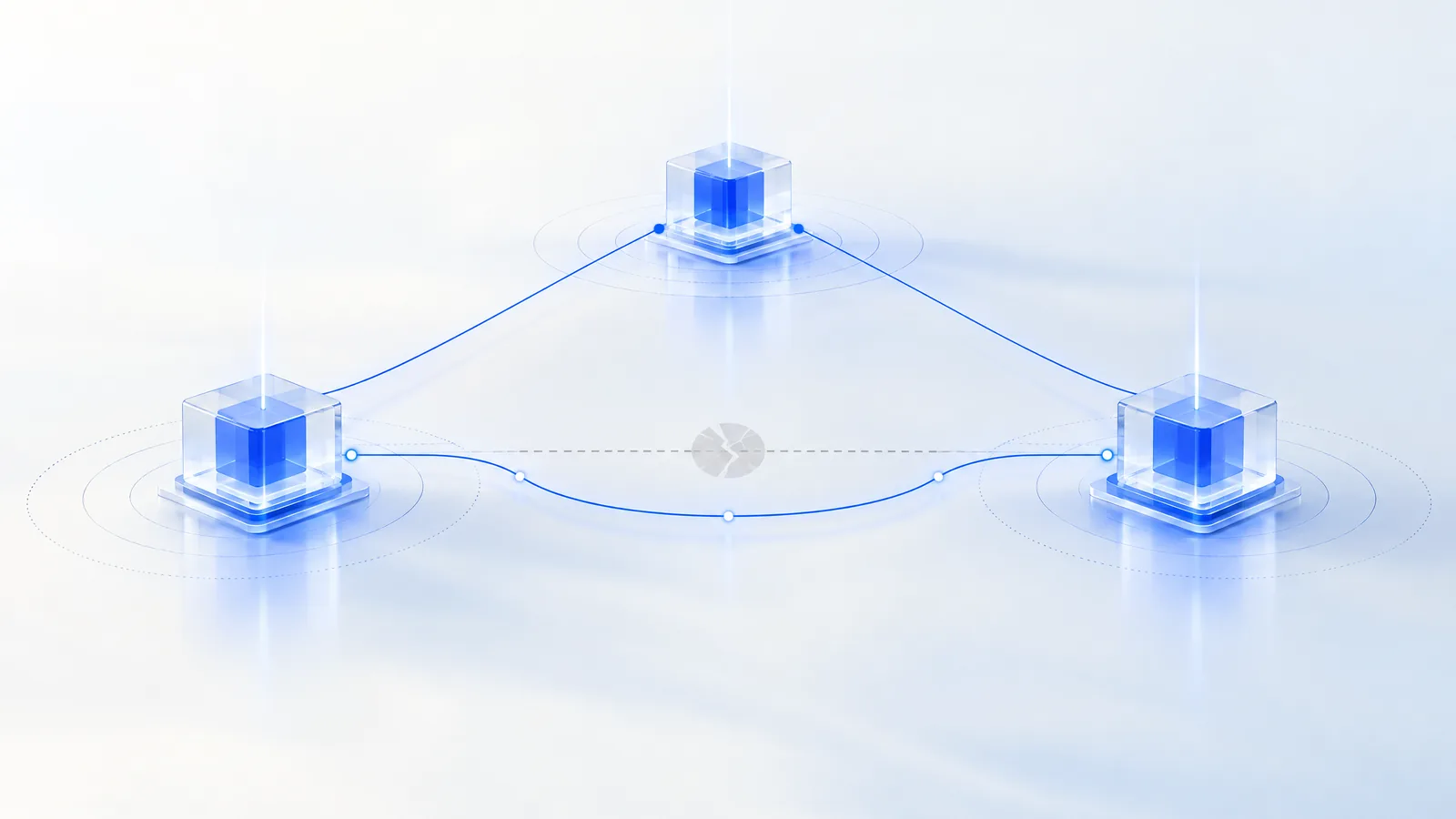
What we learned designing DNS architecture that keeps resolving when providers, links and regions fail at the same time.
Why we treat security as something built into every infrastructure decision instead of a tool you buy at the end.

The thinking behind XQO — and why modern infrastructure should feel calm, not chaotic.

Stop guessing TTL values. A practical framework for choosing record lifetimes based on how fast you need to fail over.

How we run post-incident reviews that actually prevent the next incident instead of just documenting the last one.

What actually happens between your server and your visitor's screen — and where caching helps, hurts or does nothing at all.
Follow the XQO journal through RSS and get every new field note in your reader.